How Can I Extend the Life of Ceramic Coating in Abu Dhabi’s Climate?
Investing in ceramic coating for your car is a smart way to protect its paint, but Abu Dhabi’s harsh climate presents unique challenges. Intense UV radiation, high surface temperatures, airborne sand, and mineral-rich tap water can gradually affect your car’s finish. Many ceramic coating guides focus on milder climates and may not fully address these conditions. Understanding how ceramic coating performs in Abu Dhabi’s environment can help you protect your vehicle and maintain its appearance for longer.
Surface preparation, professional application, and regular maintenance often differentiate a ceramic coating that lasts three years from one that loses its water-repellent performance within eighteen months. This blog will help you get the most out of your ceramic coating in Abu Dhabi’s extreme weather. We cover everything from application to the care your vehicle needs afterward. It offers practical advice for local conditions to help keep your car’s finish looking good and extend the coating’s life.
What Car Ceramic Coating Actually Does to Your Paint
The Chemistry Behind the Protective Layer
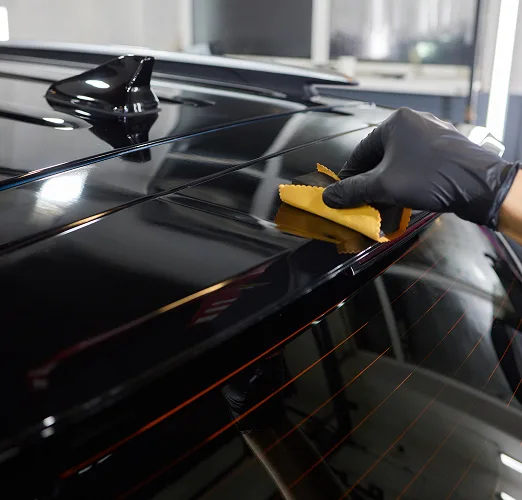
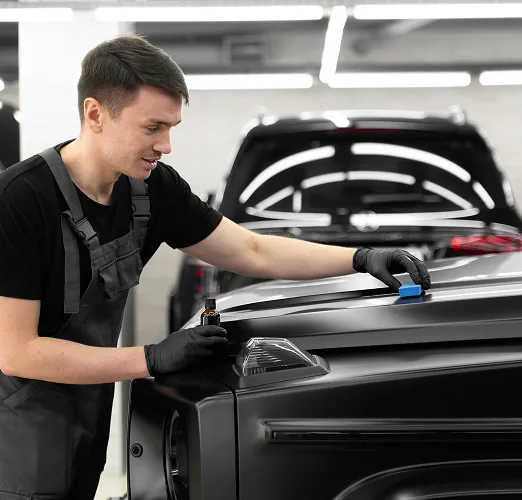
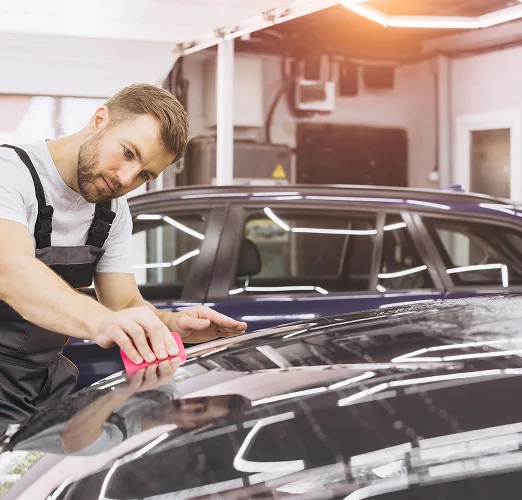
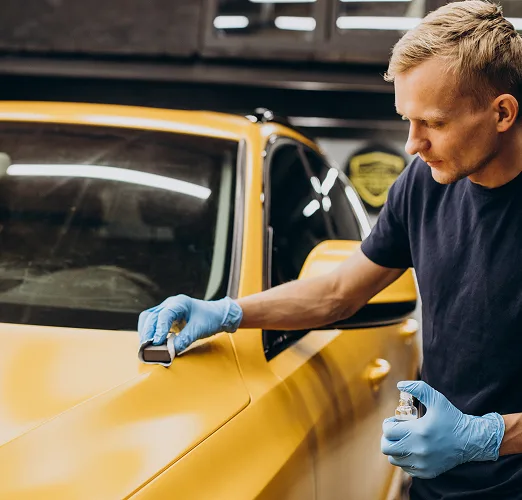
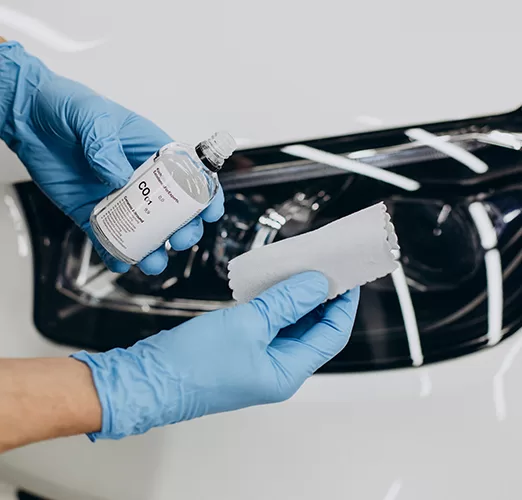
A nano ceramic coating is a liquid polymer, typically silicon dioxide (SiO2)- or titanium dioxide (TiO2)- based, that chemically bonds to your clear coat during curing. Unlike a wax or paint sealant that sits on top of the surface and breaks down within weeks, a car ceramic coating integrates with the clear coat and becomes part of it. The result is a surface that can reach pencil-hardness ratings of 2H to 9H, depending on the product, with measurable chemical resistance across a wide pH range.
That hardness figure gets quoted heavily in marketing materials, and it is worth understanding what it actually means. Pencil hardness measures resistance to a controlled, angled pencil mark, not to stone chips, keys, or highway debris. The coating will reduce fine wash-induced swirl marks and resist etching from contamination, but it won’t absorb physical impacts. Knowing this upfront helps you set realistic expectations and make smarter protection decisions for your specific driving situation.
Hydrophobic Properties and Enhanced Gloss
The hydrophobic effect of ceramic coating causes water to form beads and roll off the surface instead of spreading across the paint. This happens because the coating increases the water contact angle, often exceeding 100 degrees, compared with around 75 degrees on uncoated paint. Beyond improving your car’s appearance, this water-repellent effect reduces how long contaminants stay on the paint, minimizes water spots after washing, and makes routine cleaning easier and safer.
Gloss enhancement is the other visible benefit. The coating fills microscopic surface irregularities in the
clear coat, creating a deeper, more uniform reflective finish. For UAE car owners who closely track resale value, this matters. Maintaining a showroom-quality finish over several years supports stronger resale prospects, and a well-maintained coating can help preserve that finish over time.
Why Abu Dhabi’s Climate Challenges Ceramic Coatings
UV Radiation and High Temperatures: The Main Threats
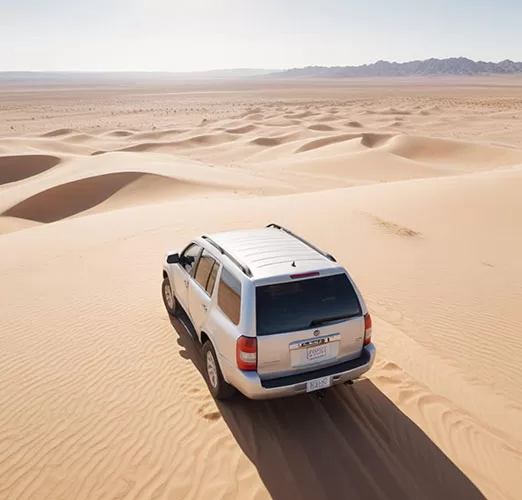
Abu Dhabi experiences very high UV index readings, and dark-colored vehicle panels regularly exceed 70°C in direct summer sun. This combination accelerates coating degradation in two distinct ways. UV radiation breaks down the polymer matrix over time, gradually reducing both gloss and chemical resistance. Heat cycling, the daily expansion and contraction between scorching outdoor temperatures and air-conditioned underground parking, stresses the bond between the coating and the clear coat beneath it.
Practically, this means a car ceramic coating applied in Abu Dhabi works harder than the same product in a milder climate, and it shows wear faster. Without correct maintenance, hydrophobic performance can fade noticeably within 12 to 18 months, even on coatings marketed with five-year warranties. The warranty describes what the coating can achieve under the right conditions. You are responsible for maintaining those conditions.
Dust, Sand, and Mineral-Rich Water: Hidden Causes of Damage
Airborne desert dust in Abu Dhabi contains hard silica-rich particles, with a hardness of around 6 to 7 on the Mohs scale. When the wind carries them, these particles can cause tiny scratches on your car’s paint, especially on front-facing panels. Dust also creates risks during washing. Using a dirty mitt or chamois can drag these particles across the surface, causing more scratches over time. Repeated washing this way can reduce the coating’s smoothness and dull your car’s paint.
Tap water in Abu Dhabi can also affect your car’s ceramic coating. As the water evaporates on a hot surface, it leaves mineral deposits such as calcium, magnesium, and silica. Over time, these deposits can cause water spots and damage the coating. The ceramic coating helps water bead and roll off the surface, but mineral-rich drops can still leave marks. If you wash your car with untreated tap water and let it dry in the direct sunlight, the problem will get worse, and the coating will not last as long.
Realistic Lifespan of Car Ceramic Coating in the UAE
What to Expect With and Without Proper Maintenance
A professionally applied nano ceramic coating, correctly prepared and maintained, typically delivers three to five years of meaningful performance in Abu Dhabi. Some premium multi-layer systems with annual inspections and approved maintenance products can push beyond that, but those results require consistent adherence to the upkeep schedule. Manufacturer claims of five to nine years aren’t fabrications, but they are achievable only when conditions are right.
Without maintenance, expect useful hydrophobic performance to decline within one to two years, regardless of what the warranty certificate says. The warranty doesn’t wash your car, and it doesn’t stop bird droppings from etching your coating in 50°C heat. The difference between the best-case and worst-case outcome from the same product is almost entirely determined by what happens after application.
PPF vs. Ceramic Coating: Key Differences in Car Paint Protection
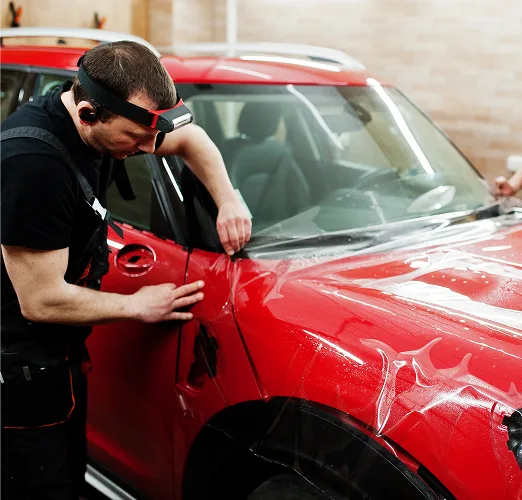
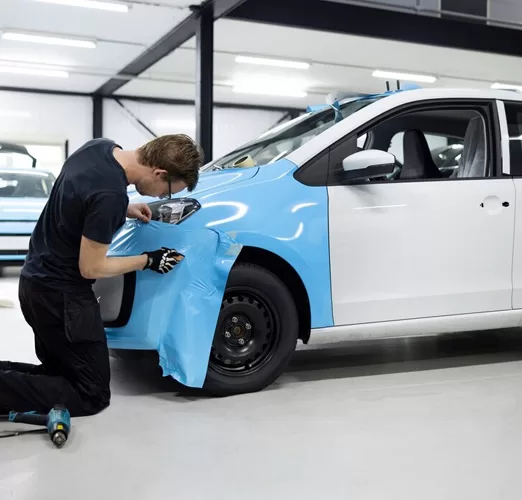
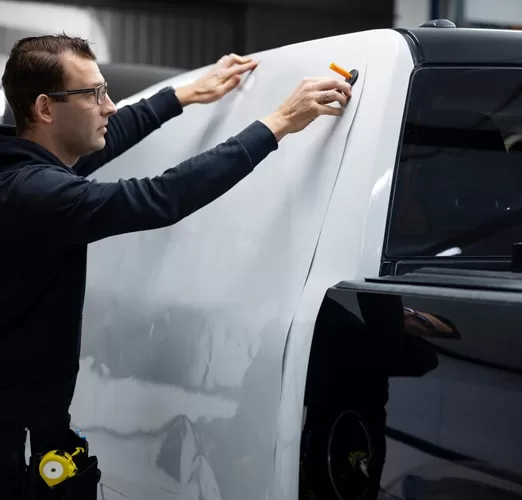
Paint protection film and ceramic coating are often compared as alternatives, but they protect against different threats. Ceramic coating excels at UV resistance, chemical resistance, water repellency, and gloss enhancement. It will not stop a stone chip or absorb sand abrasion on a highway. PPF, a physical thermoplastic film that typically lasts seven to ten years with proper care in UAE conditions, handles those physical impacts. It absorbs energy from gravel, resists sand abrasion, and on quality self-healing films, can recover from light surface scratches.
For Abu Dhabi drivers who park outdoors regularly, use Sheik Zayed Road or Al Ain Road frequently, or drive in areas with significant sand exposure, the strongest approach combines both: PPF on the bonnet, front bumper, wing mirrors, and fender edges where physical impacts concentrate, and a ceramic coating over the remaining paint and optionally over the PPF itself. Each product does its job without compromising the other.
Maintenance Habits That Help Ceramic Coatings Last Longer
Washing Techniques That Make the Biggest Difference
How you wash your car plays an important role in how long the ceramic coating lasts. Use the two-bucket method: one bucket with pH-neutral car shampoo and the other with clean water to rinse your wash mitt. Always rinse the car thoroughly before washing and use a soft microfiber mitt to avoid scratches. Wash your car in the shade, preferably early in the morning or after sunset, when the surface is cool. Avoid washing a hot car, as sudden temperature changes may affect the coating.
In Abu Dhabi, wash your car at least once a week to maintain the coating’s performance. During summer or after sandstorms, you may need to wash it more often. Avoid automatic car washes with brushes, as they can trap dust and grit and scratch the paint. Touchless washes remove loose dust, but hand washing works better when your car is heavily soiled.
Ceramic Coating Maintenance Routine for Abu Dhabi’s Climate
Most professional ceramic coatings benefit from a spray booster or SiO2 topper every two to three months, especially in Abu Dhabi’s heat. These products refresh the hydrophobic layer and extend performance between full reapplication cycles. If your car has a graphene ceramic coating, choose a graphene-specific maintenance spray. Always use the coating manufacturer’s approved topper for best results.
The most important rule is to use products your installer approves or recommends for your specific coating. Not all SiO2 sprays are compatible with all coating formulations. Incompatible products can interfere with the coating’s surface chemistry, cause streaking, or accelerate contamination buildup instead of preventing it. When in doubt, ask your installer before buying anything off the shelf.
What to Avoid to Extend Your Ceramic Coating’s Lifespan
Several common habits consistently undermine ceramic coating performance in Abu Dhabi’s conditions. Avoid these:
- Using alkaline traffic film removers or harsh degreasers as regular wash products; these attack the coating’s chemistry over time
- Leaving bird droppings, tree sap, or insect residue on a hot panel for more than a couple of hours; the heat accelerates etching significantly
- Parking outdoors in direct sun daily without any UV-blocking cover when a shaded option exists. Dry-wiping a dusty car with any cloth; always rinse thoroughly before any contact.
- Applying abrasive compounds or clay bars to a cured coating without specialist advice
Each of these habits erodes the investment you made when you applied it. The coating is doing its job; these habits work against it.
Why Professional Application Improves Ceramic Coating Performance
Surface Preparation Is Where Most DIY Attempts Fall Short
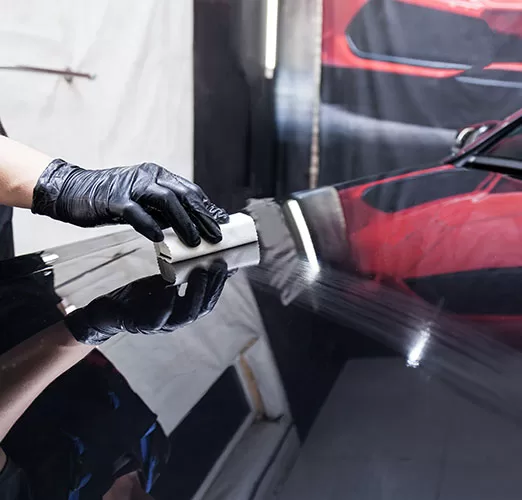
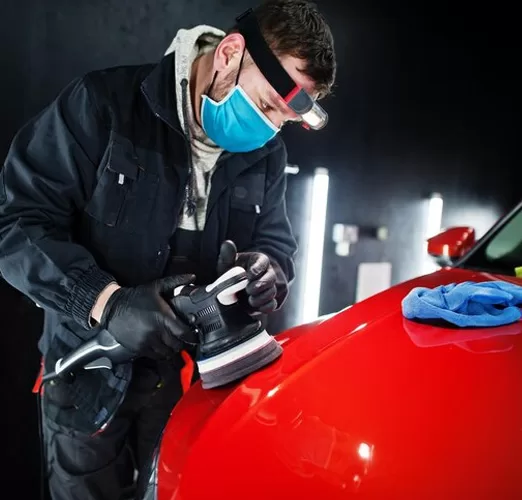
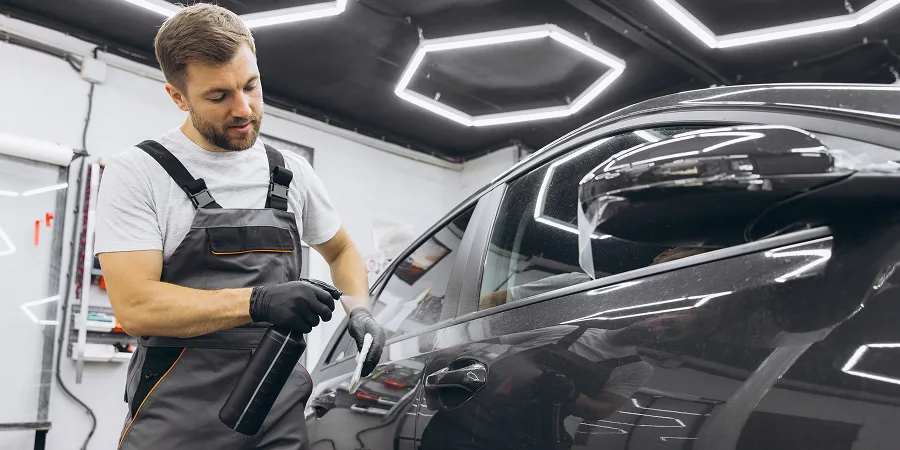
A car ceramic coating’s longevity is determined before you apply a single drop to the paint. Surface preparation, including chemical decontamination to remove bonded iron particles and industrial fallout, paint correction to eliminate swirl marks and oxidation, and a solvent panel wipe to remove oils and residues, directly determines how well the coating bonds and how long that bond holds. A coating applied over oxidation or contamination in Abu Dhabi’s climate will degrade much faster than its rated lifespan and will do so while permanently preserving the defects it was applied over.
Choosing a Specialist With Genuine Regional Expertise
Not all installers understand how Abu Dhabi’s specific conditions affect coating selection, how to manage application temperature, or how to account for hard water during the process. These decisions require regional experience, not just product training. Lamassat Car Care Center has been operating in Abu Dhabi and Al Ain since 2002, and the team makes product and application
decisions based on long experience working with UAE heat, dust, and UV loads daily. That local knowledge translates into coatings that perform closer to their rated lifespan rather than falling short.
When choosing a professional installer, ask for the exact coating product name, written warranty terms, the preparation steps included in the package, and whether the installer has manufacturer certification. The cost of ceramic coating in Abu Dhabi depends on your vehicle type, the coating quality, and the level of paint correction required. The results depend largely on proper surface preparation, application quality, and the installer’s experience with local climate conditions.
Final Thoughts
A quality ceramic coating is one of the most effective protective investments an Abu Dhabi driver can make for their vehicle’s finish and resale prospects. But the climate here demands more from both the coating and the owner than any manufacturer’s standard guidance accounts for. Proper surface preparation, skilled application, good washing habits, and periodic booster treatments separate a ceramic coating that performs well for three to five years from one that fades in eighteen months.
Abu Dhabi’s specific conditions, including extreme UV loads, hard water, fine silica-rich dust, and daily temperature swings, aren’t afterthoughts. They are the main variables that determine how your
coating ages. Getting advice from a specialist who understands those variables from years of working in this environment is a better starting point than relying on general product specifications or reviews written for cooler climates.
Before you book a service or buy a DIY kit, speak with a professional with genuine UAE experience who can assess your paint’s current condition, recommend the right coating tier for your usage, and walk you through a realistic maintenance schedule. Contact our team at Lamassat Car Care Center to book a consultation and get a straightforward assessment of what your vehicle needs.
Frequently Asked Questions
Washing your car with a ceramic coating roughly once a week is the recommended baseline for Abu Dhabi’s conditions, with touchless rinses between washes as needed after dust or sandstorms. In Abu Dhabi’s heat, contaminants like bird droppings and sand bond to surfaces faster than in cooler climates, and even a quality coating will not protect paint indefinitely if residue is left to bake on a panel sitting at 70°C.
Auto ceramic coating kits are available and cost far less upfront, but they require thorough paint correction, decontamination, and a controlled curing environment. The risk is real: poor preparation can lock defects under the coating and, in worst-case scenarios, reduce its lifespan to a year or less. For most car owners in Abu Dhabi, a professional ceramic coating service delivers better long-term value per dirham spent.
No. Car ceramic coating is a chemical protection layer that resists UV radiation, water spotting, and contamination. It does not absorb physical impacts. For stone chips, sand abrasion, and highway debris, paint protection film is the correct solution. The two products serve different purposes and work best together.
The clearest sign is loss of hydrophobicity: water stops beading and rolling off, and the car looks duller after washing. Contaminants also stick more easily and require more effort to remove during washing. A specialist can inspect the coating’s condition and advise whether a booster spray is enough to restore performance or if a full reapplication is needed.
Explore the other services: Car Wrapping Abu Dhabi, Car Protection Film, and Car Tinting Abu Dhabi