Is Car Window Tinting Legal in Abu Dhabi? Everything You Need to Know About Laws, Costs & Benefits
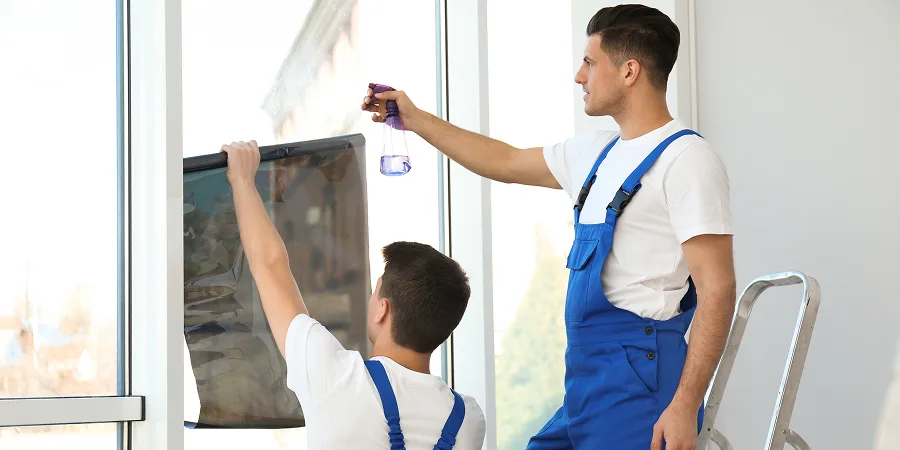
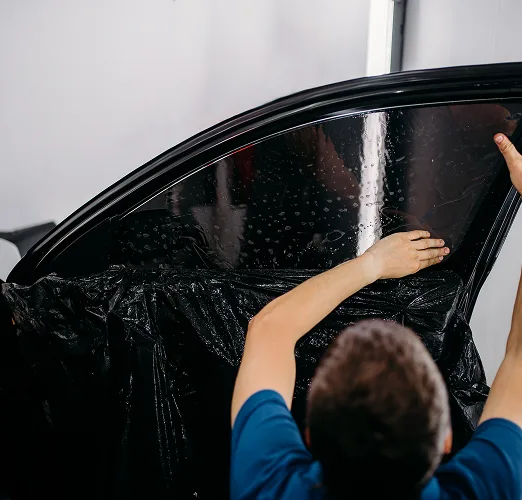
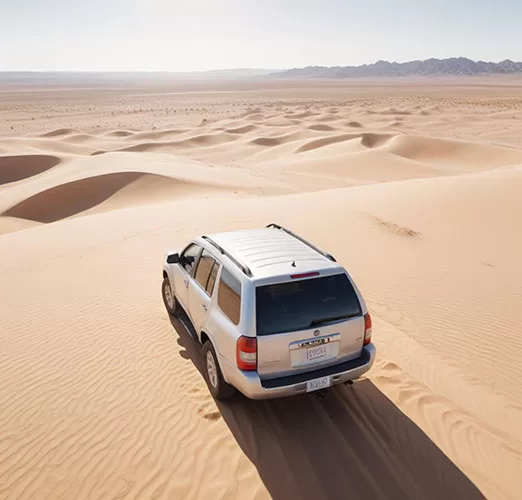
Car window tinting in Abu Dhabi is one of the most practical upgrades a driver can make. Yet a surprising number of people hold back because they are unsure of what the law actually allows. Abu Dhabi summer temperatures commonly top 45°C, and the heat within a cabin can get dangerously high when a vehicle sits in direct sun. Every driver in the city knows the feeling of grabbing a steering wheel that has been baking for hours. The good news is that tinting your car in Abu Dhabi is legal as long as you follow the limits set by the UAE.
Before you book, here’s what you need to know: the legal limits for 2026, how different types of film perform in the heat of the Gulf, what fair pricing looks like for your vehicle and the right questions to ask any installer before they touch your glass. We’ve been fitting performance grade window film throughout Abu Dhabi and Al Ain for over two decades at Lamassat Car Care Center. So the guidance here is based on real UAE conditions, rather than textbook theory.
What Abu Dhabi’s window tinting laws actually say
Car window tinting in Abu Dhabi: the 50% VLT rule explained
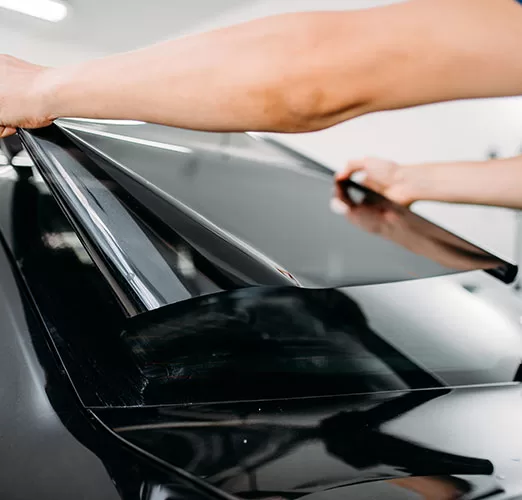
VLT is an acronym for Visible Light Transmission, which means the percentage of visible light that a tinted window still needs to permit through. In Abu Dhabi, private vehicles must have a minimum of 50% VLT on the front side windows, rear side windows and the rear windshield. Higher VLT means lighter tint, lower VLT means darker tint. The 50% limit means your glass can block up to half the incoming visible light, and that’s where the law draws the line.
The rule applies across the UAE for private cars. Some older installation guides or trade sources quote 30% VLT for certain window locations, but that number is not reflective of the current 2026 UAE rules for private vehicles. With a reputable shop, the installer should check the VLT percentage before the film is applied, not after.
Which windows have zero tolerance for tinting
The front windshield main glass area cannot be tinted. The only allowable exception is a narrow strip of sun tint on the very top of the windshield (this is standard across the UAE). If any shop is willing to tint your full windshield they are putting you at legal risk, and that is a clear sign to walk away. The traffic police enforce this rule to ensure road safety.
Why enforcement matters more than you think
In Abu Dhabi, if you are caught with non-compliant tint, the standard UAE fine is AED 1,500. In more serious cases, officials can slap black points on your license and impound the vehicle, with release fees in some cases reaching AED 10,000. Non-compliant modifications can also cause problems at the time of vehicle inspection. A legally compliant installer shields you from all of these results, so that is precisely why it is worth asking upfront whether a shop knows and works within the 50% VLT limit.
Why the Gulf climate makes window tinting more than a cosmetic choice
How interior heat builds up without a heat-rejection film
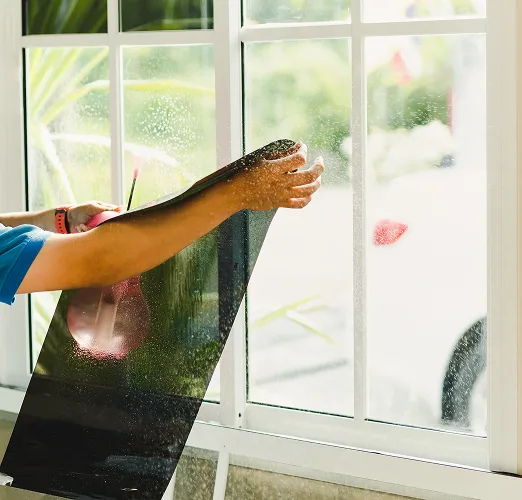
In Abu Dhabi’s climate unshaded glass is a solar collector. Without a heat-rejection film, infrared radiation floods the cabin, raising surface temperatures significantly, increasing AC load and cool-down times on every trip. With a quality heat-rejection window film, the total solar energy entering the cabin can be reduced by 45, 70% depending on the grade of the film and the VLT taken.
The number you want to look for is TSER, or Total Solar Energy Rejected. This number is a better representation of actual heat rejection than infrared rejection numbers alone because it takes into account all forms of solar energy reaching the glass. When comparing films, ask for the TSER figure at the VLT you intend to install.
UV damage: what it does to your skin and your interior
High quality ceramic and nano ceramic films block over 99% of UV rays. This is significant in two different ways. “First, there is a known skin health concern regarding exposure to UV light thru vehicle glass during daily commutes, particularly for drivers who spend significant amounts of time on Abu Dhabi’s highways. Secondly, over time, UV radiation is the primary source of dashboard cracking, seat fading and leather deterioration. Protecting your interior from UV rays will extend the life of your cabin materials and preserve resale value
Glare reduction and privacy on busy Abu Dhabi roads
Glare from direct sun and reflected light off other vehicles causes genuine driver fatigue and slows reaction time, a real concern on Abu Dhabi’s high-speed ring roads and sun-facing expressways. Quality tint can reduce visible light glare by 50% or more without compromising your outward visibility. The added privacy on congested city roads is a practical daily benefit too, particularly for families and vehicles that frequently carry valuables.
Film types compared: which one handles Abu Dhabi heat best
Dyed and metallic films: when budget is the priority
Dyed films are the cheapest films, which usually have a heat rejection of about 15 – 30 % TSER. They do well in mild climates but fade more quickly under intense UV exposure, a real limitation in the UAE. Dyed tints normally show visible color change and fading within one to three years in Abu Dhabi conditions depending on quality and exposure. Metallic films are better for heat rejection, 35 – 55 % TSER usually, but they can interfere with GPS, mobile signals and radio reception. So they are a mixed bag for daily driving in a city where navigation and connectivity matter.
Ceramic and nano-ceramic: the practical choice for Gulf conditions
Ceramic films reject 45 to 65% of total solar energy and block 70 to 95% of infrared radiation without affecting electronics. That blend also makes them a good fit for Abu Dhabi’s climate. Nano-ceramic films improve performance with TSER of 55 & 70% respectively. In UAE specific testing, premium nano-ceramic films can reduce interior temperatures by 5 to 8° C more than standard ceramic films when tested under similar conditions. If you’re a driver looking for the best heat protection at legal VLT levels, nano ceramic is the obvious practical choice.
Both ceramic and nano-ceramic films hold their performance over time better than dyed alternatives. The color stays consistent, the film doesn’t bubble, and heat rejection figures don’t degrade significantly after years of UAE sun exposure. The higher upfront cost reflects a film that actually delivers across the life of the installation.
Car window tinting In Abu Dhabi, costs and prices for 2026
What drives the price difference beyond film type
More glass surface area on SUV’s and 4×4’s means more material and labor time . That’s why the same film grade costs more on a larger vehicle . The final price depends on the film brand, the installer’s skill and whether the job is covered by a warranty. A quote of AED 300 for a full sedan ceramic tint should be met with skepticism, not excitement. At that price point, the film being used is almost certainly not what it is being advertised as.
Why the cheapest quote usually costs more over time
UAE heat causes cheap dyed films to bubble, fade and peel quicker. A film that starts to fail in one to two years means paying again to have it removed and reinstalled, and you’ve lost protection during the time the film was degrading. The first visit to a reputable shop and a ceramic film will usually cost less over a three to five year period than replacing a budget tint job a time or two in the same window.
What to check before booking any Abu Dhabi tinting shop
Warranty length and what it actually covers
Top tinting shops in Abu Dhabi offer warranties ranging from two years on entry level installations to ten years or lifetime on premium ceramic packages. The length is not as important as what is put in it. Specifically ask if the warranty covers bubbling and color fade, the two most common failure modes in the UAE climate . A warranty covering only “workmanship” with film failure excluded has limited real-world value.
Installation time: what’s realistic for your vehicle
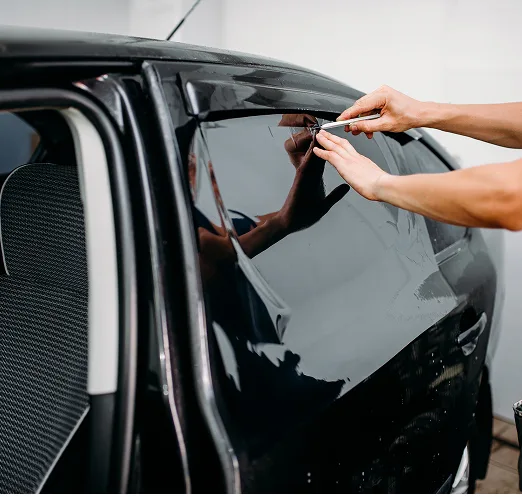
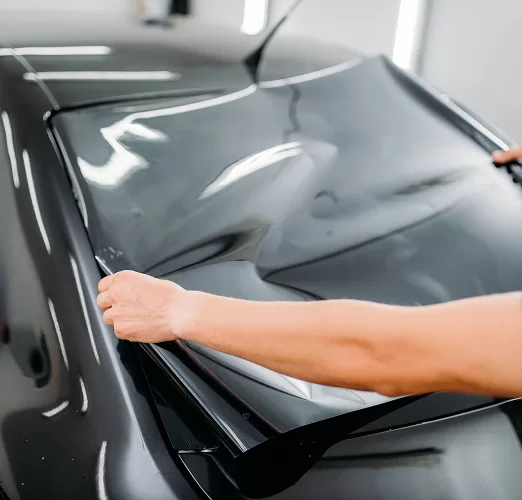
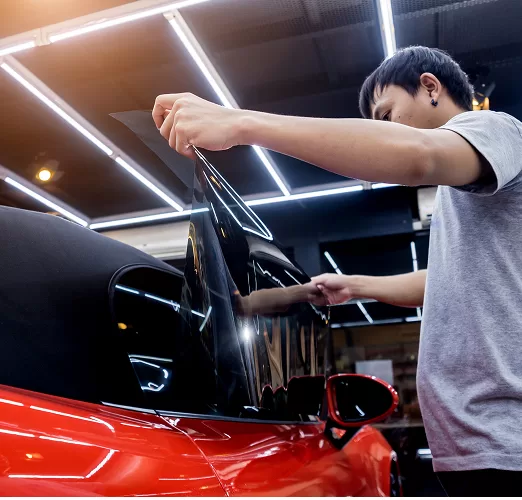
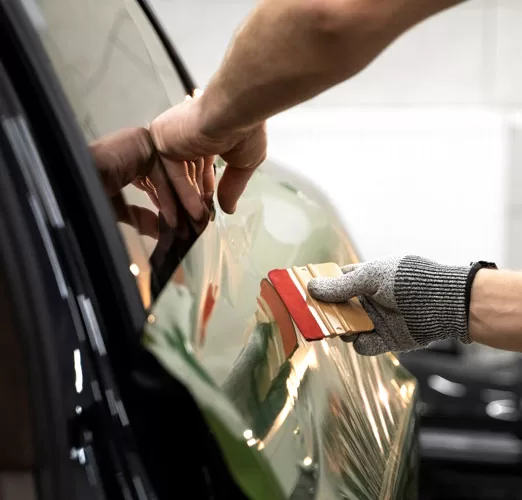
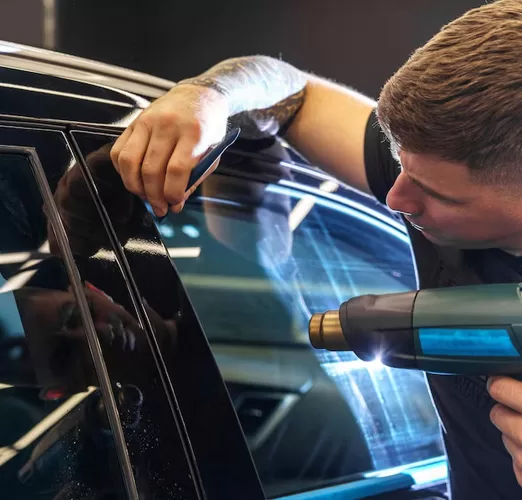
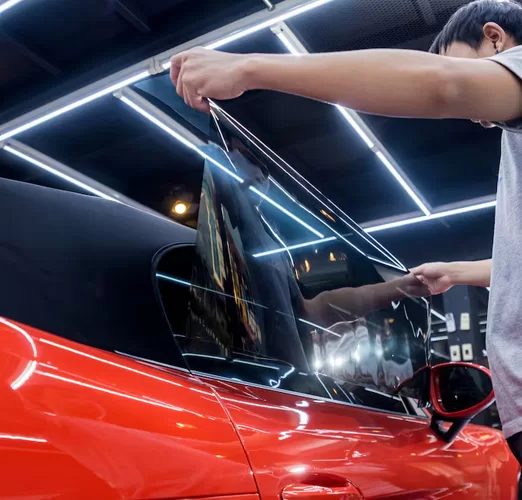
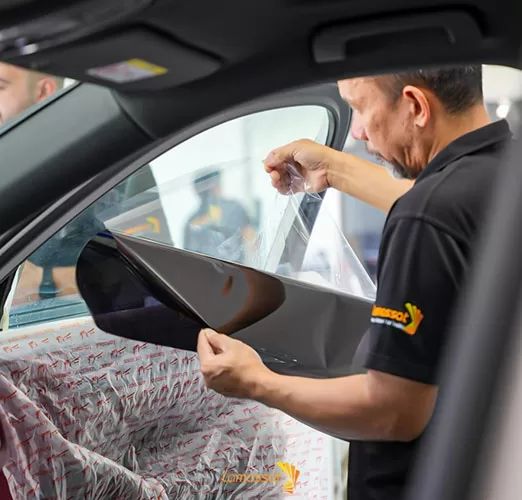
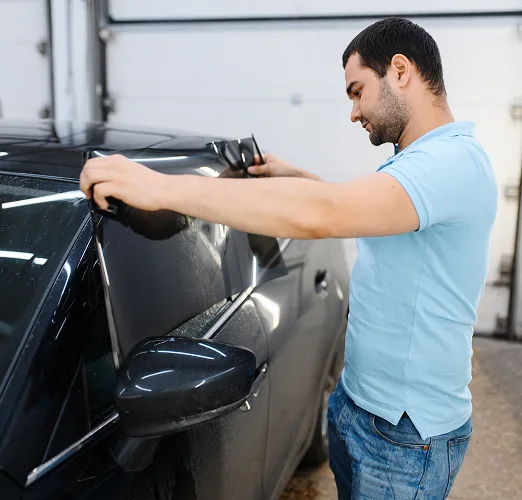
A regular tint job on a sedan at a shop takes 2, 4 hours. SUVs and larger vehicles require 3, 5 hours, especially ceramic film installations that require careful alignment and finishing. Watch out for any shop quoting 30, 45 mins for a full car. Contamination under the film, edge lifting and other issues from rushed installations can appear within weeks and take time to troubleshoot.
Certifications and film brand transparency
Ask the installer what brand of film they use and ask for the product specific sheet before you commit. A good shop will happily tell you the brand, the product line, the VLT percentage and the TSER figure. They will also check that the VLT being installed is within the legal limit in Abu Dhabi. If the shop can’t tell you the brand they use, or avoids answering the question, treat it as a warning sign and continue your search.
Why Abu Dhabi drivers choose Lamassat Car Care Center for window tinting
More than two decades working in UAE conditions
Lamassat Car Care Center has been serving the drivers of Abu Dhabi since 2002. That’s over 20 years of working specifically in the Gulf climate, film recommendations built around real UAE conditions; the sustained heat, the intense UV, the sand abrasion and the legal requirements that apply here. We work with premium film brands, install to legal VLT limits standard and warranty our work with clear documented terms.
What sets a specialist apart from a general workshop
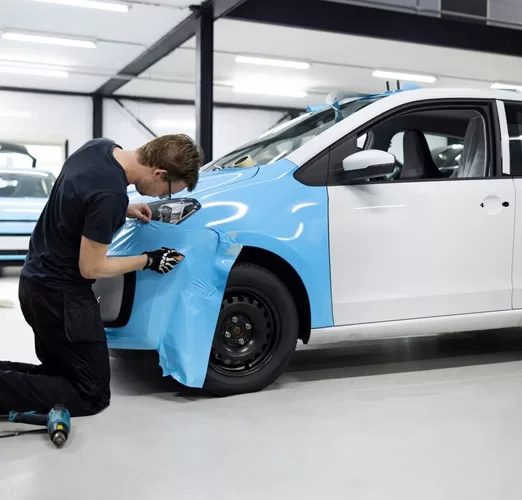
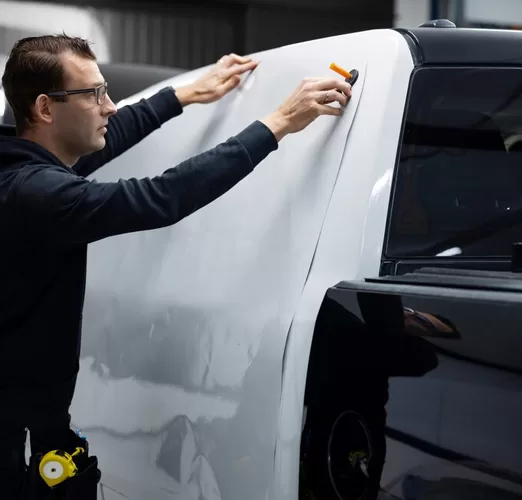
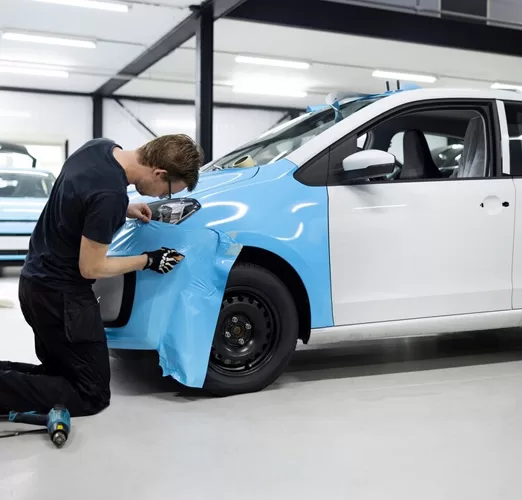
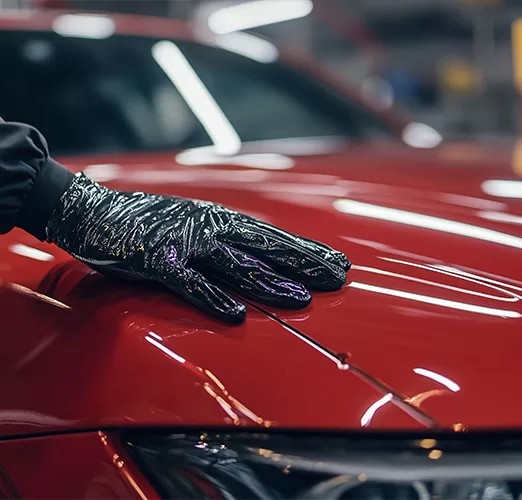
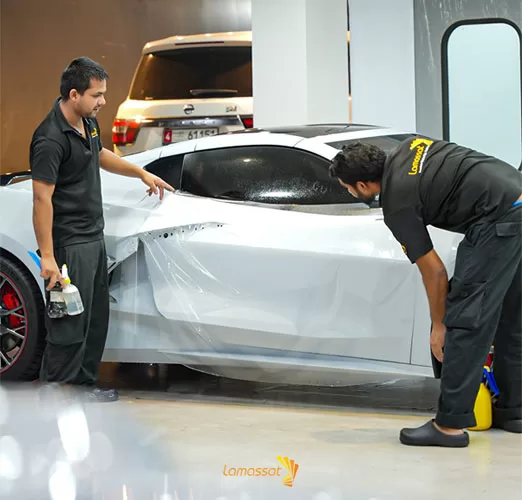
Car window tinting Abu Dhabi is one of the core services of Lamassat, alongside paint protection film, nano ceramic coatings and car wrapping – not a side offering. Our specialists understand the difference between a film that looks good on the day of installation and one that will continue to perform through the years to come in the Abu Dhabi summers. We serve owners of luxury & sports cars, new car buyers looking for protection from day one, and every day family vehicles – with the same precision and same commitment to certified materials. Professional-grade protection fitted correctly and on your schedule is within easy reach with locations in Abu Dhabi and Al Ain.
The short version before you book
Car window tinting is totally legal in Abu Dhabi with 50% VLT on side and rear windows. The front windshield is clear except for a small strip at the top for sun. For the Gulf climate, ceramic or nano-ceramic film is the logical choice that offers better heat rejection, dependable UV blocking, no signal interference and long-lasting durability.
When evaluating any installer, focus on three things: which film brand and product line they actually use, what the warranty specifically covers, and how long the job will realistically take. Those answers will quickly separate professional shops from ones that aren’t worth your time or money.
If you’re ready to get your windows tinted correctly, legal compliance, premium materials, a clear warranty, book your appointment with Lamassat Car Care Center. Visit us at our Abu Dhabi or Al Ain location, or contact us through our website for a transparent, no-pressure quote tailored to your vehicle.
Explore the other services, Car Protection Film, Car Care Abu Dhabi, and Ceramic Coating Abu Dhabi
.